CLICK HERE TO LISTEN TO ME READ THIS POST.
“What’s the story, Michael?”
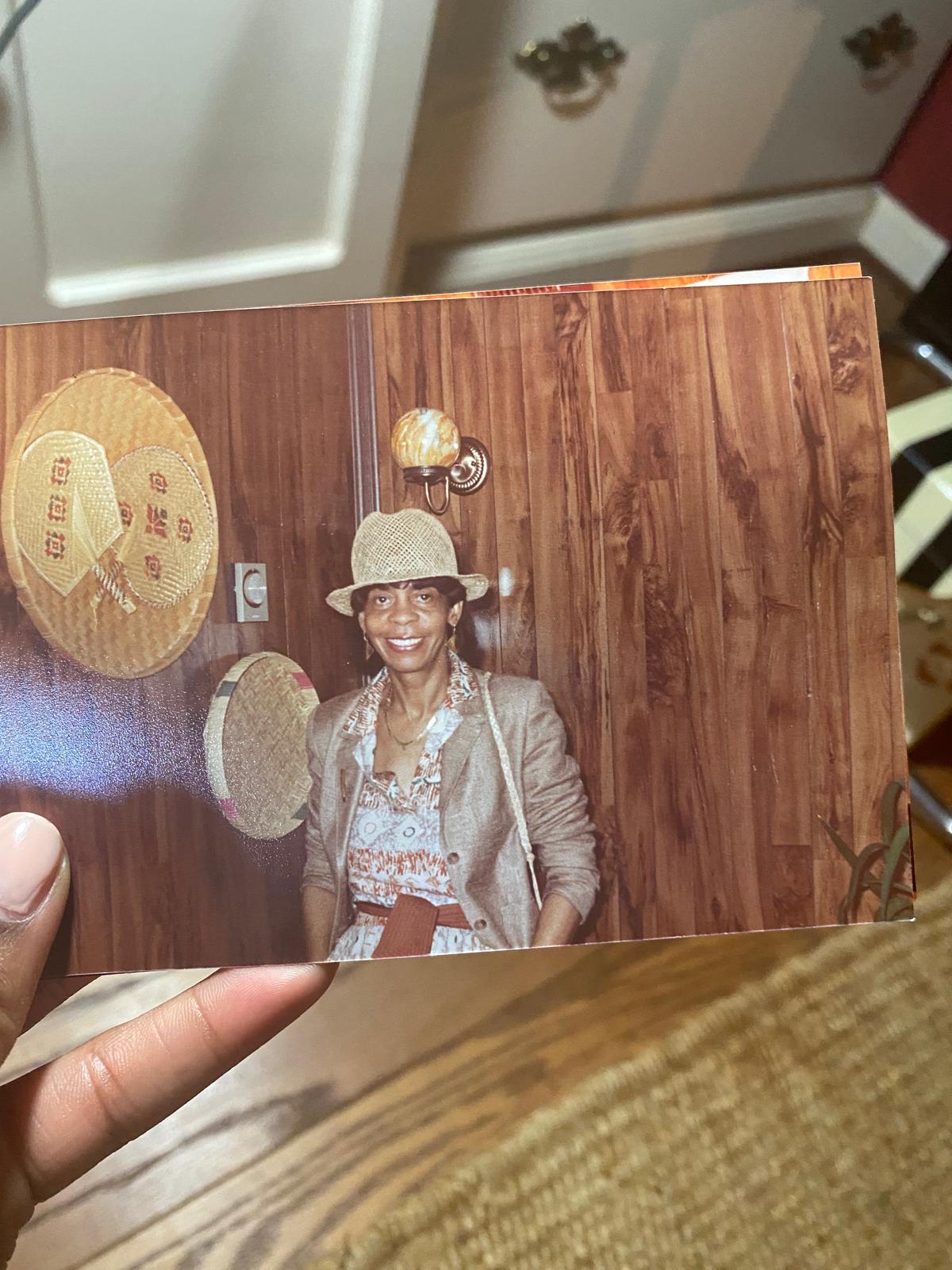
We cracked up! Loud too, in the middle of the super quiet Methodist church. That’s exactly what she would’ve said in the tone she would’ve said it. And, whether or not my feelings about not being able to speak at her memorial service were justified, his saying that eased my tinge of jealously and grief compounded by feelings of exclusion and relational invalidation.
Why was I jealous? He knew her for months. I knew her for years. A whole decade. Why did I feel excluded? We were so close and I wasn’t offered the chance to express what she meant to me and no one acknowledged what she had meant to generations of black women (like the time I mentioned Kimberlé Crenshaw and she casually mentioned that she knew her mama and had mentored Kimberlé, the creator of the term “intersectionality,” one I use so often). I so badly wanted to thank her from the rooftop on behalf of all the black girls and women she’d mentored. But it didn’t happen that way.
I still helped Michael prepare though. He was so nervous. When the reverend called him to come sit closer to the stage, he released a final breath of nerves. I asked him real quick: “What would Dr. Pat say?” That’s when he smiled, leaned in, and said: “What’s the story, Michael?”
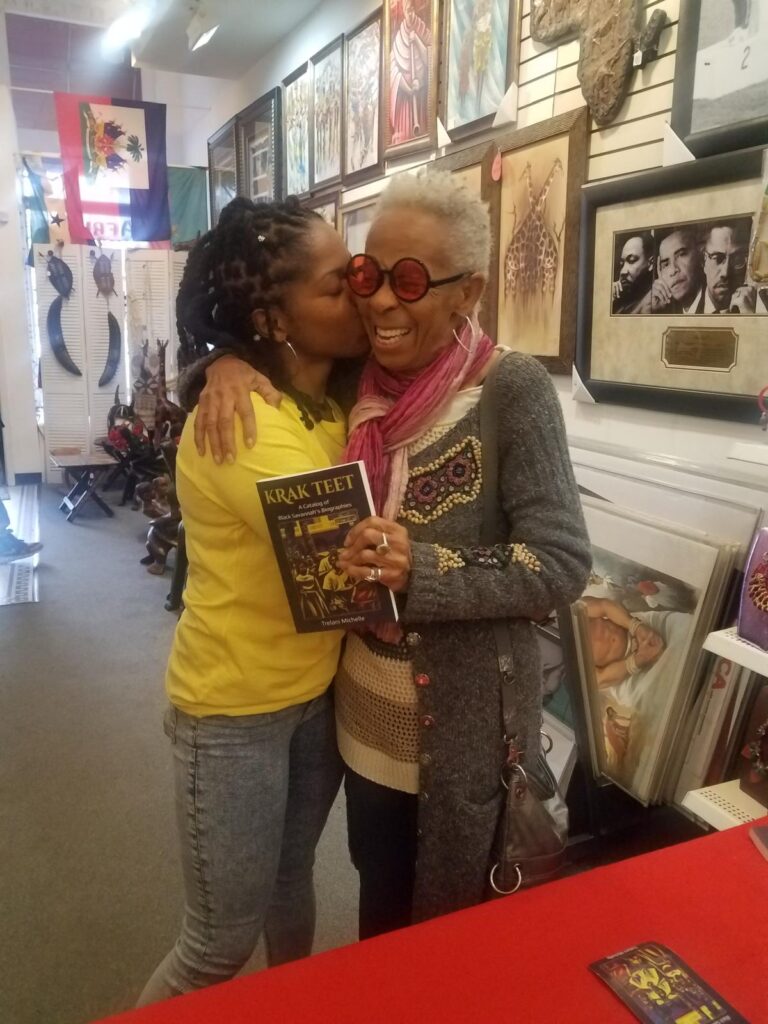
The beautiful thing about Dr. Patricia Stewart is that if I could have a back-and-forth conversation with her about my feelings at her service, she would patiently listen to everything I had to say, offer language to what I was feeling, then make some poetic connection between my feelings and something similar in the world. And I would walk away not feeling shamed or embarrassed but understood and appreciated, smarter, and also a tad…confused.
I’m reading Everything is Spiritual by Rob Bell, a former pastor, who walked away from leading a church with thousands of members because “it was time to do something else.” I wish so bad that I could talk about him and this book to Dr. Pat. We often discussed books. And to tell her how I’ve realized, because of this book, how Jesus-like she was.
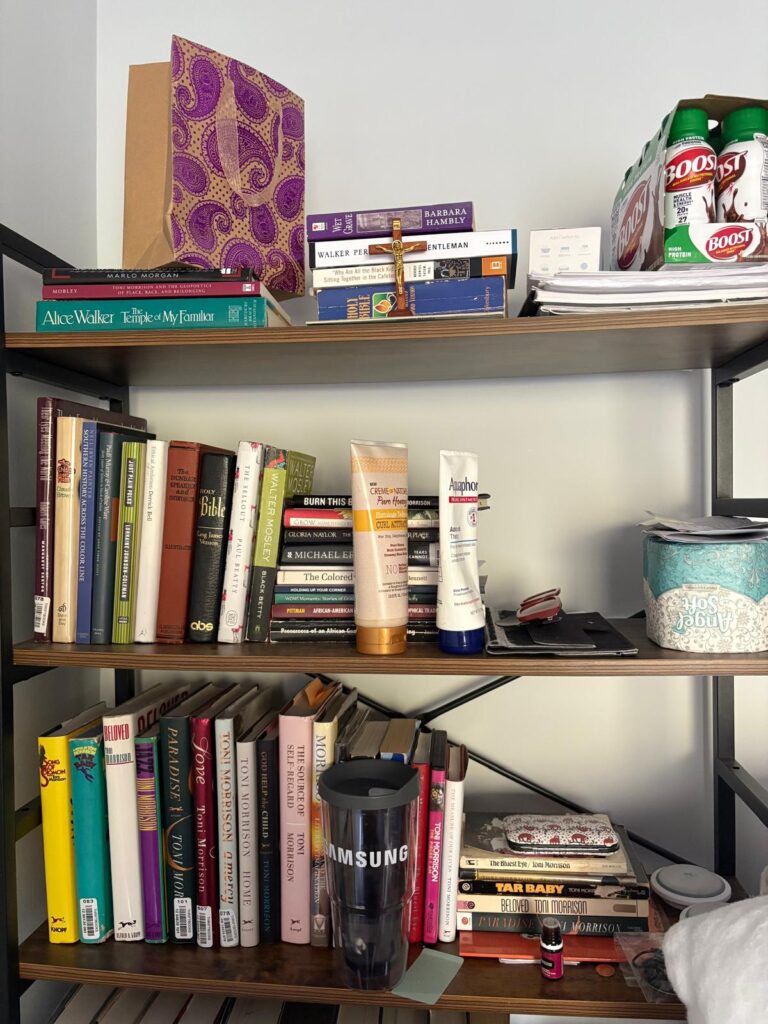
Jesus answered questions with questions. Dr. Pat did too. Not to get more clarity for herself but to help you see you more clearly. The Bible is fulla poems and parables. For instance—and you might’ve known this, but I didn’t—the book of Revelations in the Bible, according to Rob Bell, ain’t about the world ending. “It’s a letter from a pastor in political exile to his church….They’re living under a suffocating empire….He’s writing to real people in a real situation giving them clarity, courage, and hope.”
That’s how Dr. Pat spoke.
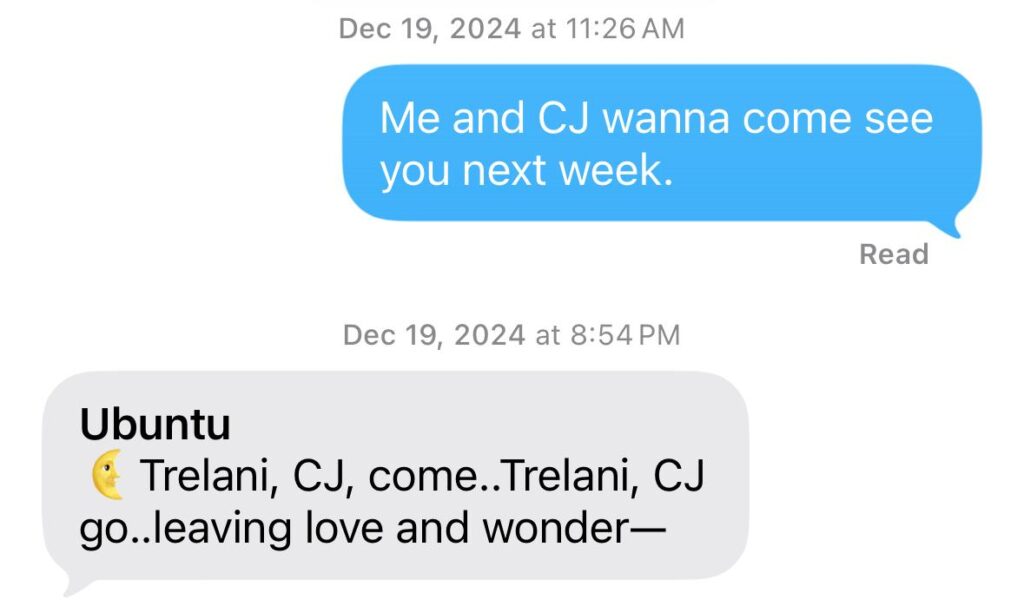
Or back in February of 2024 when she texted me: “My ‘Come Sunday’ time was impromptu and intentional. Warm fuzzy, sacred and a full tithing plate of love. I had the phone off and in a zip pocket. Please call me so that I can feel renewed by the real Trelani voice. And I’ll have an embodied tuner on.”
I read my TEDx speech to her a month before hitting the main stage. She praised it and knew instantly that “cousins” were Black and other non-white people. White folk are our neighbors. She got that. That night, she sent me a text saying: “Cousins and Neighbors” with a link to an article titled: “Who Will Pay Reparations on My Soul?”
In 2021, she texted me: “When is the last time you stopped clinging to a list of to do’s? And read peers writing on down their souls and found soul sisters? What storage system do you have for Holy Spirit moments? Danced in your own loving arms? Make an artists way for your daughter to create herself looking at the world? And brighten her world with love permission? Grace is sufficient.”
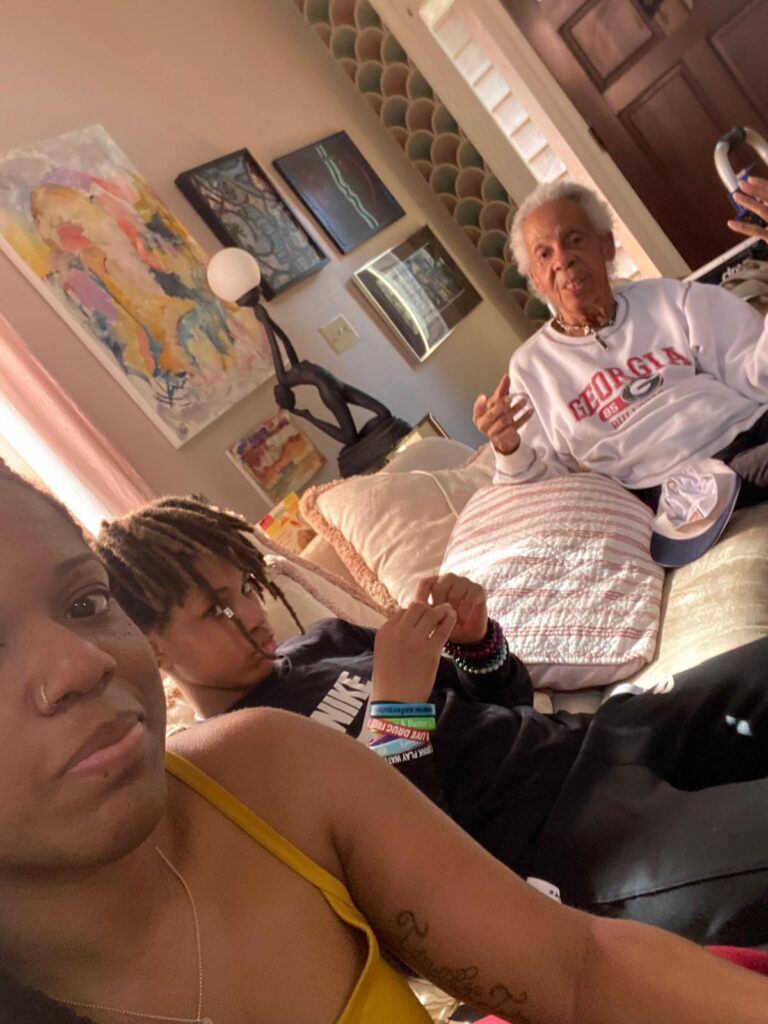
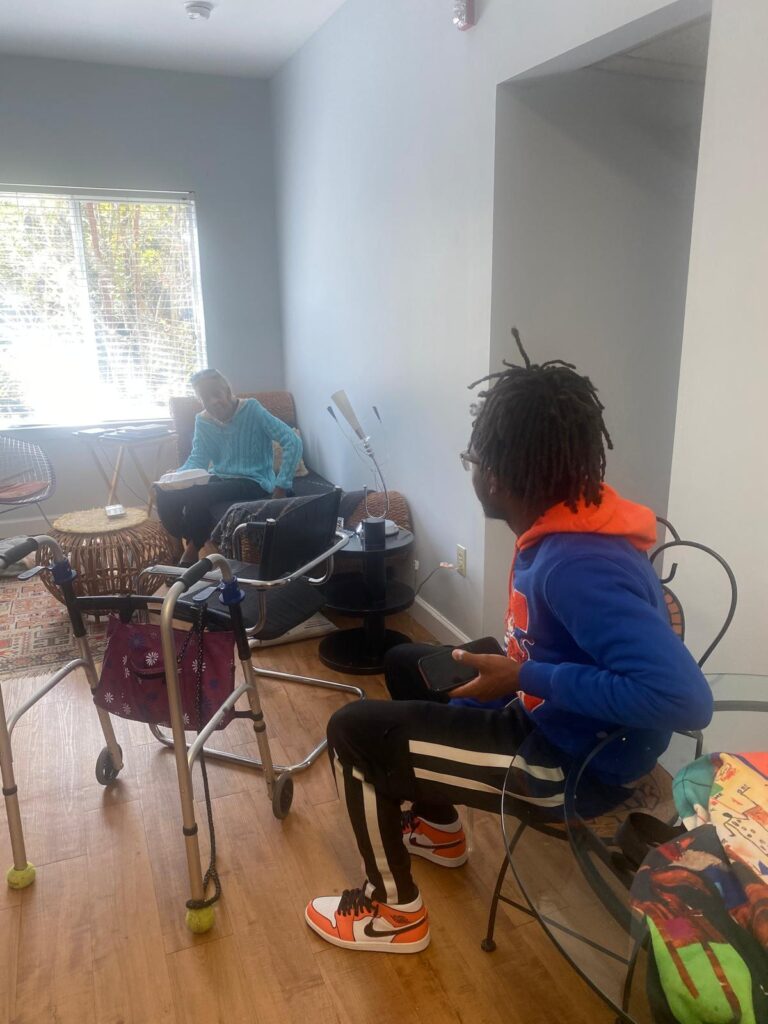
A former public-school teacher, professor, school/clinical counselor, and psychologist, she sent that after I’d told her that I was frustrated with my daughter for sighing in response to me telling her to do something. Her immediate response was “Sighing and exhaling is the body’s way of relieving pressure.” Hours later, I got that text of questions.
After deciding to divorce my first husband, because she knew him too, I felt like I needed to “confess” that to her and convince her why it was in our best interest. Convincing wasn’t hardly necessary. If I had left it at “I’m leaving him,” that would’ve been sufficient. She cared more about how I was carrying the weight of my decision.
“Many truths can only be communicated through parables and poems and surreal stories that don’t make sense but your heart knows are true in some very hard-to-describe way.” —Rob Bell, Everything is Spiritual
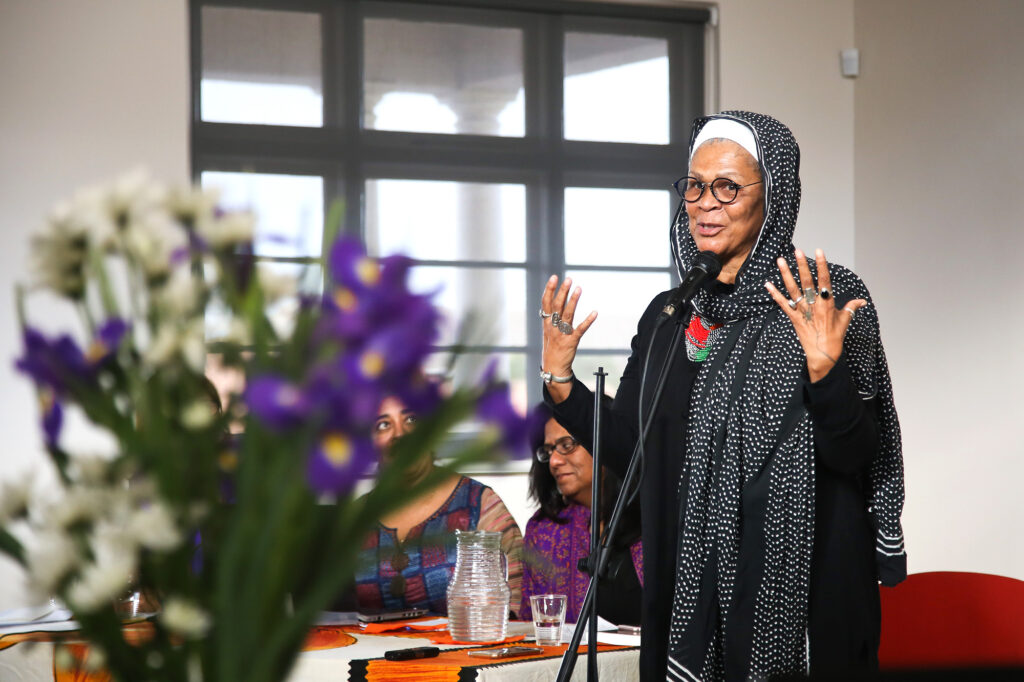
amina wadud is also blowing my mind these days. She’s from Bethesda, Maryland, raised Methodist, later become Buddhist then converted to Islam while in college. She’s queer, into astrology, quotes Toni Morrison, and taught me that Allah has 99 names, some of which are feminine. So she doesn’t gender God. (I don’t either. Neither did Dr. Pat, despite being a Methodist ’til the day she died.) (Fun fact: Dr. Pat co-facilitated an international talk at the 2010 Toni Morrison Society Biennial Conference in Paris. Also met Toni in person there.)
Before my friend Elbi introduced me to amina as a reference point for our Ramadan journey this year, I’d already been listening to Dr. Omar Suleiman, a 39-year-old Palestinian Imam from New Orleans. The brother speaks truth to power and puts his own body on the line, including being arrested in 2018 while protesting for DACA protection.
How I found him? The night before Ramadan started, my head popped up from my pillow ‘round midnight with me wondering if I was culturally appropriating Ramadan. So I got up to do a lil research and learned how I could participate without converting but also without treating the Holy month as an aesthetic or a trend rather than the sacred season that it is.
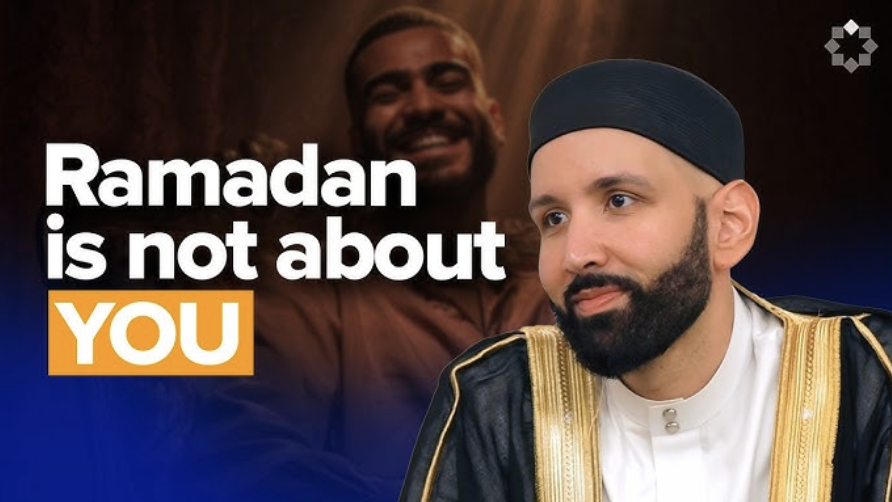
I got much of my answer in Dr. Omar’s one-hour video about how your Ramadan is “not about your habits. It’s not about how good you’re going to feel. It’s not about your own upliftment.” It’s about increased devotion to the Higher Power. It’s to purify the heart and seek forgiveness. It’s to cultivate empathy for those who are starving but ain’t choosing hunger like we are. It’s to give thanks that we can focus on a fast, free from terror and political violence, unlike those in Sudan, Palestine, Haiti, or US detention facilities. Ramadan is about all of those things, Dr. Omar shared. But what it ain’t, he stressed, is about you.
And maybe that’s the story here, Dr. Pat: No, I ain’t get to speak at your service that day, but that don’t matter. Plus, you’ve already given me and my peers the language to live with courage and compassion. And I already have the platform to share that gut and heart space, and to talk about you on it.
Leave a Reply