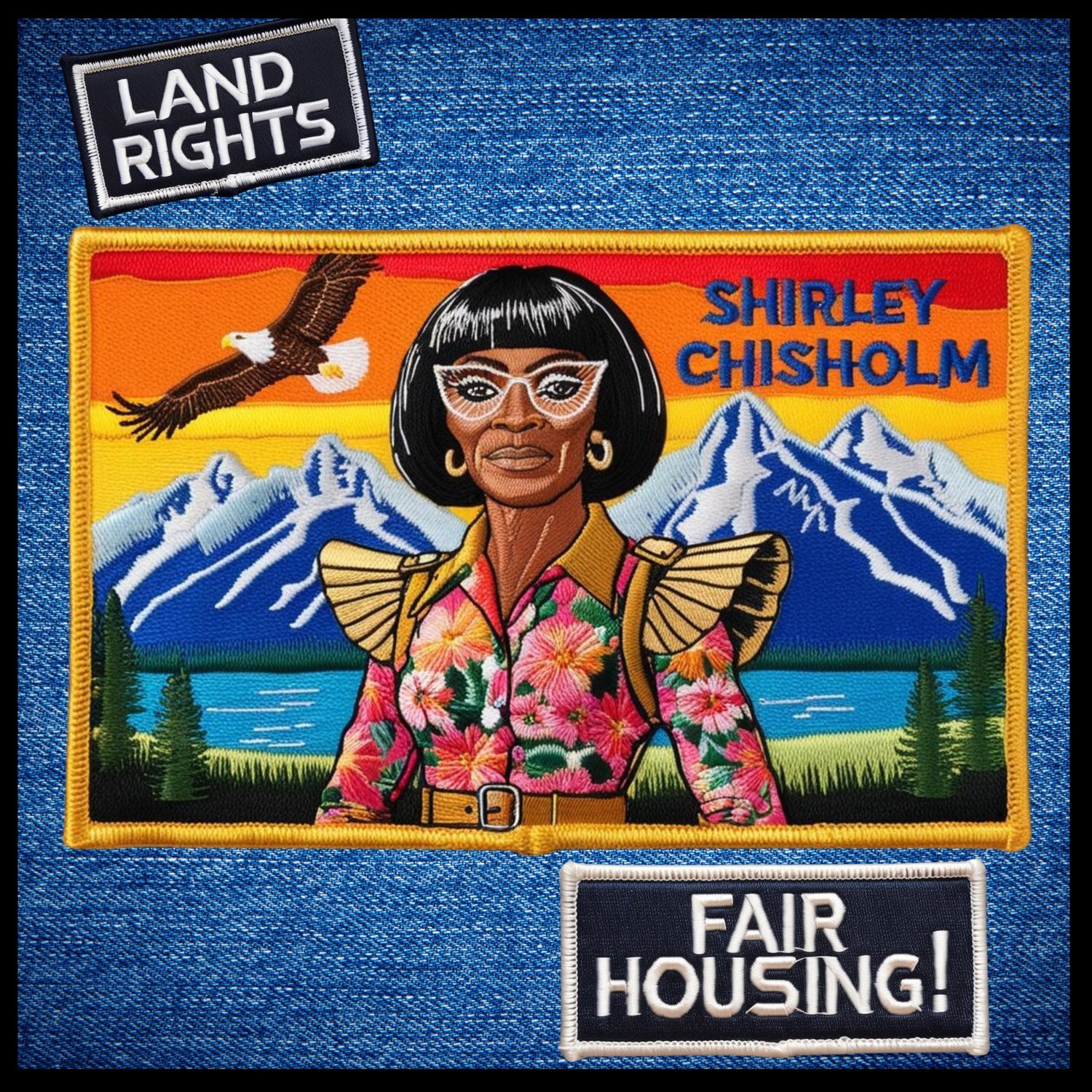
Shirley Chisholm once said, “You don’t make progress by standing on the sidelines.” And that’s especially true when it comes to the land beneath our feet and the roofs over our heads. So many of our foremothers understood that owning land wasn’t just about property—it was about possibility. About freedom. About safety.
In 1859, Harriet Tubman—already a master conductor of the Underground Railroad—mortgaged seven acres of land from Senator William H. Seward. He and is wife, were allies of Black folk. That land included a house and became her permanent home after the Civil War. It became a place of refuge for formerly enslaved people. A place where her family could finally be safe. And in her later years, part of that land was transformed into the Harriet Tubman Home for the Aged.
Land ownership marked her transition from fugitive to freeholder. From seeker to sanctuary. And that land gave her the space to dream.
Tiya Miles, an historian and Marcus Garvey professor at Harvard, published a book about Harriet last year called Night Flyer. In it, she shared how Harriet had fell for a conman’s get-rich hack. But, as Tiya writes:
“Harriet regrouped after a setback, for she had built a resilient community and expanded her land base with the purchase of twenty-five adjacent acres in 1896… In the final decades of her distinctive life, [she] invested in an aboveground social network rooted in Black-owned land that functioned as communal space… Harriet, her home, her dreams, and her land were social magnets. People came to seek her out, and all could find shelter under her roof.
Harriet’s dream in late life was to acquire enough land to establish a home and health-care center for people who were ill, elderly, or living with disabilities.”
And she did it. She placed those twenty-five acres and several buildings under the care of her church, the AME Zion. She named the main building John Brown Hall. The second building was called The Harriet Tubman Home for the Aged—after herself.
In 1913, she took her last breath inside John Brown Hall—inside the haven she built with her own hands and her own vision.
And that’s what I want to center today. Land gave Harriet room to breathe. Room to gather her people. Room to make mistakes and start again. Room for her dreams to take root.
She brought her new husband there. She raised her adopted daughter there. She sheltered her parents and siblings there. She started a garden there, including fruit trees. Raised pigs as nourishment and investments. And it’s where she died—with dignity and peace.
Land, when stewarded with love and vision, can outlive us. It can carry our care forward. And in this fight for economic and environmental justice, we’re not just talking about buildings—we’re talking about building futures.
As Shirley Chisholm and Harriet Tubman both showed us:
When a Black woman claims space, she doesn’t just make room for herself.
She makes room for a whole community.