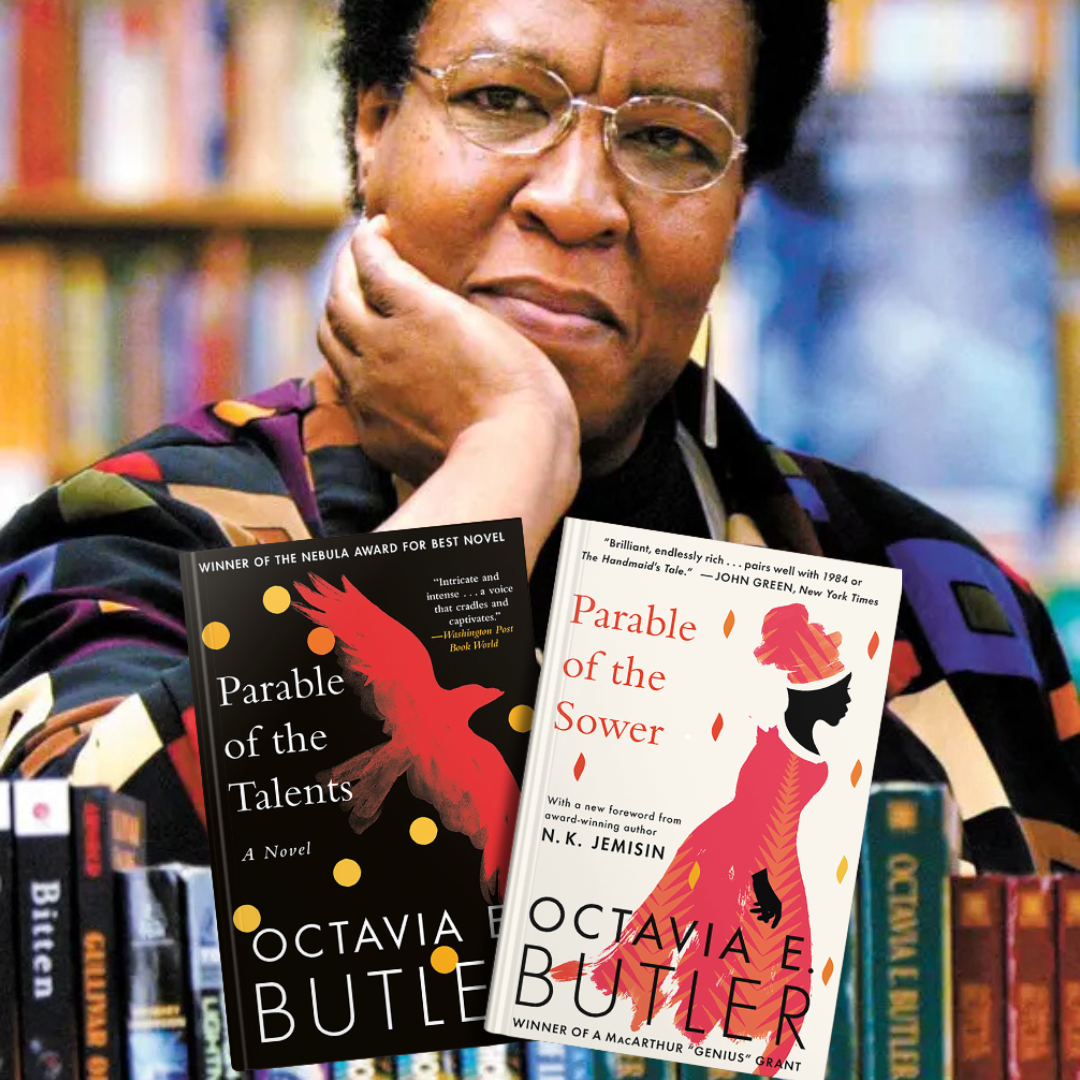
I extracted these lessons from Parable of the Sower and Parable of the Talents by Octavia Butler. I also shared this list on TikTok and, as one person commented, “People spend a lot of time pointing out the ways [Octavia Butler] predicted today’s tragedies. They forget to see the ways she told us to protect and prepare. The antidotes are in the text!”
Here they are:
1. Prepare while you’re comfortable.
This is when you master your weapons, take your time developing new skills, save money, hide money, save seeds, learn to grow food, identify an emergency meeting place in case chaos breaks and calls ain’t accessible.
2. Pay attention and learn constantly.
Learn from everything—from books (fiction and nonfiction), people, the environment, everything.
3. Build community with intention.
Choose your people carefully. Folk you can share responsibilities, resources, and vision with. And make sure y’all have the same understanding of what it means to have each other’s backs.
4. Be ready to leave and pack light.
5. Language shapes reality.
Careful what you call people and how you name events/situations.
6. Don’t deny reality.
Face hard truths with courage and clarity.
7. Prepare for loss, but don’t let it immobile you or make you cold-hearted.
Keep planning, growing, and loving while knowing you’ll endure beaucoup losses.
8. Soon as you safe to, grieve your losses.
9. Dream beyond the crisis.
See and build a future worth living for. Don’t let ’em kill your imagination. If you do, they won.
10. God is Change.
Anticipate changes in the climate, politics, your relationships, in everything, and position yourself to be able to move accordingly.
11. Small communities are better.
According to Octavia Butler, “In small communities…people are more accountable to one another. Serious misbehavior is harder to get away with, harder even to begin when everyone who sees you knows who you are, where you live, who your family is, and whether you have any business doing what you’re doing.”
12. Diversity makes communities stronger.
The more variety you have in your community (different languages, upbringings, skill sets, and ways of thinking) the more prepared you are to face the unexpected.
13. Family might not see the vision or commit the way you need them to.
Build anyway.
14. Don’t disregard the children’s ideas/perspectives.
15. Have rituals and be mindful ’bout ’em.
Rituals are important. It’s our way of marking a big transition/occurrence. Really think about why you’re doing it rather than just following tradition for the sake of it. Bring intention and relevance into your rituals and make sure they resonate with you and your community.