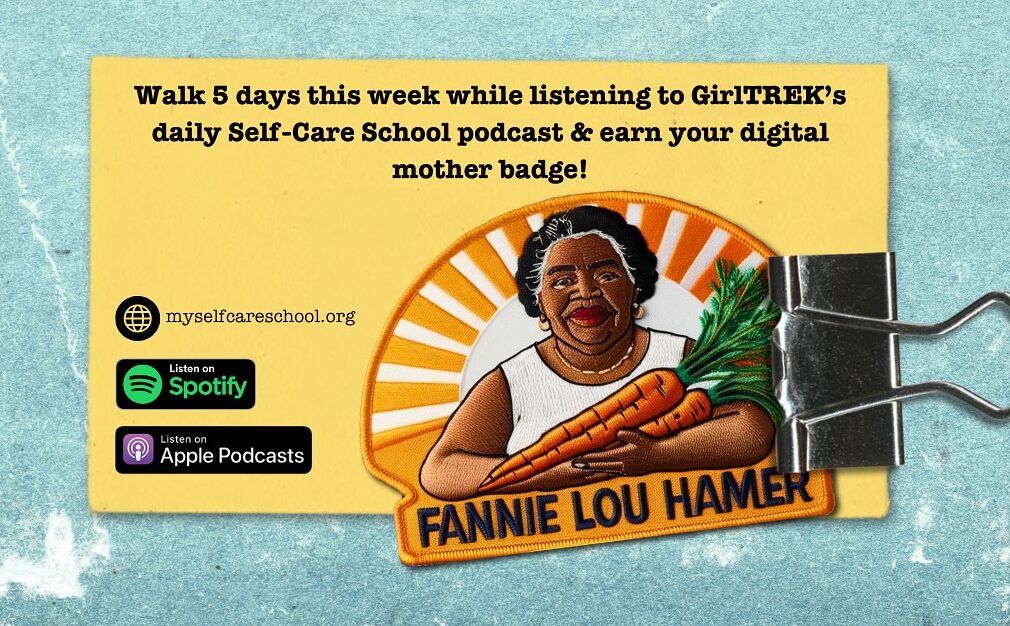
This week, we’re lifting up the legacy of Fannie Lou Hamer—a visionary who understood that healing a community meant healing the body too. She knew liberation couldn’t happen if folks were hungry or disconnected from the land.
So I wanna share a passage from Working the Roots, an oral history edited by Michele E. Lee that reminds us just how deep our cultural food knowledge goes:
-cultural knowledge
-classism/politics
-shaming foods/culture with migration/assimilation
-country was waste not/want not…that became embarrassing
[Begin quote]
My parents came from a time when people from the community they lived in were eating fresh all the time. They were young adults when World War 2 happened and it was considered affluent if you had canned or glass goods. But none of my parents and their siblings were raised like that. And my mother, being raised on a farm, felt that when she came to the city, they got poor.
This was before my mother was married and I was born, there was some truth to that economically, but they were still shelling their own peas. These folks of the culture knew better in many, many ways, but things like beans and rice was considered a poor folks food. Well, it’s a whole protein and fiber. They weren’t bringing in the high quality foods in the neighborhoods of color, but even though it was low quality, it was also expensive.
So my mama said, Okay, I know what to do. We ate a lot of greens and drank the pot liquor too. Folks would look at it and turn up their nose, but it’s extremely healthy. She didn’t like to make greens greasy at all, but she would overcook them until they were limp as hell and soft. I like leftover greens because they are soft and easier to digest.
When I steam vegetables today, I don’t throw the water away. I drink the pot liquor. My mom would also make her own Clabber. Clabber is sour milk. Now this is real country. But though people think country ways, like making Clabber, are unsophisticated and backwards, it’s actually good for you. Our tendency now is to throw it out if you smell something sour, but my mom didn’t throw anything away.
Most people on the planet eat some sort of fermented food. Without question, the bacteria are good for you. My mother also didn’t lotion our skin. She used oil, and only then she’d use oil that was edible. If she could eat it, she would use it.
[End quote]
I posted online recently that in the movie Soul Food, it wasn’t the food that killed Big Mama—it was the stress. Her ex-husband’s gambling. Her daughters always fighting. The secret stash of money she never told anybody about that could’ve solved half the problems in the family. A lotta folks in the comments disagreed. Said no, it was the food.
But I think that’s because we’ve forgotten what soul food actually is.
The roots of soul food are in Africa—and then across the diaspora, including right here in the American South. Before 1975, most of our food was seasonal, local, and fresh. There wasn’t much dairy or gluten. Fried food wasn’t everyday food. Veggies were always on the plate, including tomatoes for breakfast. Minimal seasoning but deep flavor.
What changed? Shame and stress. Folk started leaving the country for the city, and started assimilating to survive, ESPECIALLY their children. They ain’t wanna be associated with the country AT ALL! That included language, clothes, but also what they ate. Farming and gardening was country, as was shelling peas and gutting fish. Canned goods and dining out became a symbol of status.
On top of that, the stress of capitalism, which we identify as progress, steals your time. So more processed food and a more sedentary lifestyle, because, understandably, you’re exhausted. And when we’re stressed and tired, we crave salty, crunchy, and sweet—foods that comfort but don’t sustain.
Fannie Lou Hamer knew that land and food were political. She created the Freedom Farm because she knew: if we wanna get free, we gotta eat. And if we wanna eat well, we gotta recall the old ways.