Self-Care School is a 10-week podcast series by GirlTREK. Every Friday features Trelani Michelle, sharing elder/ancestral wisdom through personal observation and book excerpts. You can also listen in versus reading here:
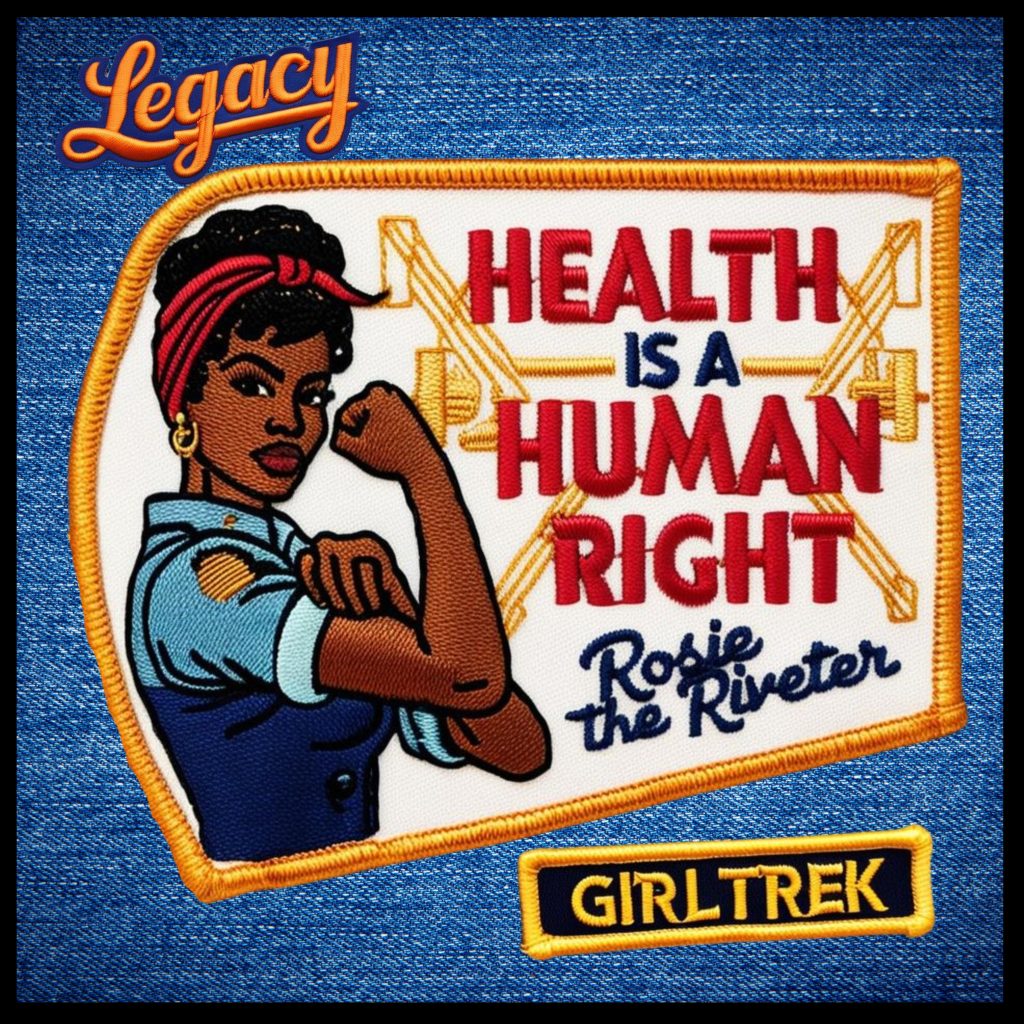
This week, we’re talking Body Reset 101, how we reclaim our health by tapping into the wisdom of our ancestors. And to guide us, we have this week’s foremother: Rosie the Riveter.
Rosie the Riveter was the symbol of the women who stepped into factories and shipyards during World War II, proving that women could do the same hard, physical labor as men—and do it well.
Her motto? “Yes We Can.” We meaning women. And as Black women, we know we can because we been been. We’ve held families together, built movements, and kept communities thriving with however much—or little—we had. But here’s the thing: now, it’s time to go as hard for our own bodies as Rosie did to prove women’s worth in the workforce.
Women who Rosie symbolized talked about working 10-hour shifts, six days a week, in hard-on-the-body positions. That was a first for many of them, but not for us. Our grandmothers and great-grandmothers were no strangers to long hours and backbreaking labor. They had a hella strong work ethic, but they didn’t have the luxury of prioritizing rest.
On top of that, many of us didn’t grow up going to the doctor, and not always by choice. Jim Crow shut us out, cash poverty kept us away, and even when we had access, history gave us good reason to be cautious. So, we took our health into our own hands.
For my book Krak Teet, I interviewed 21 Geechee elders over the age of 80 about their life experiences between 1920 and 1970, including how they took care of themselves. Sifting through all those stories, I realized our self-care back then was guided by three core beliefs:
1. Be proactive about staying well because we couldn’t afford to be sick.
2. Sickness is released by pooping it out, vomiting it out, sweating it out, or crying it out.
3. Work with what you got to take care of yourself, knowing Mama Nature is always on your side.
A couple examples of what that looked like:
- Reverend Dr. Carolyn Dowse, one of the elders I interviewed, told me: “We didn’t go to the doctor. Twice a year, you had to be cleaned out. Castor oil and orange juice.”
- Mary Butler Smith said when they got sick, her grandfather made a toddy with brown tikka, onion, honey, and lemon. “It would knock you out, and you’d sweat something serious in your sleep. By the time you wake up, you’d be good as new.”
- Curt Williams said, “We had something that I take to this day. It’s called rabbit tobacco… Get that and you can either steep it for tea or roll it up and smoke it. All I know is that they say it make you live a long time.”
Wellness wasn’t something they had to think about; it was built into their way of life. Cars and air conditioning were luxuries, so they walked everywhere and spent more time outdoors. Grocery stores weren’t always an option, so they grew their own food. Their everyday lives kept them moving, kept them in tune with nature, and kept them well.
Fast forward to today: we’ve got a lot more options, so we have to be more intentional. We’ve entered every workforce imaginable. We’ve proven ourselves over and over again. But when it comes to our bodies—our rest, our nourishment, our nervous systems—ain’t nothing to prove. We just gotta reclaim.
So, as we think about resetting our bodies, let’s take a page from our ancestors’ book:
- Eat food that’s local, seasonal, and as whole as possible.
- Incorporate movement into your day, however you can.
- Find doctors you can trust—but also let nature work its medicine.
- And say YES to rest. Real rest. Rest that takes up space and carries not a lick of guilt. The kinda rest that showed up in our foremothers’ wildest dreams.
That’s the message for today, y’all. Until next time, take care of yourselves like your life depends on it—because it does.